 | | | | | 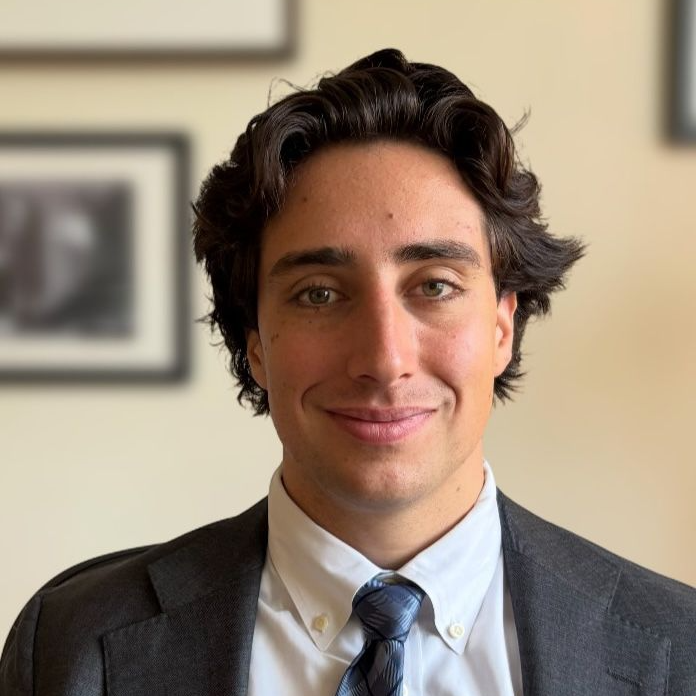 | | By Benjamin Guggenheim | Not a subscriber? Sign up here to get this newsletter in your inbox. - Big Tech was on the ballot Nov. 3. Voters rejected data center construction in their backyards and elected Democrats who were outspoken about catastrophic risk from AI.
- AI industry super PACs found themselves on the defensive, while AI-safety-aligned groups backed candidates who went on to flip key battleground seats. Colorado Rep.-elect Manny Rutinel will come to Congress with a detailed AI agenda.
- AI regulation is a possibility in the new Congress, although Democrats are likely to use their oversight powers, first, to investigate Big Tech and alleged industry-related corruption.
This is Benjamin Guggenheim. Welcome to WP Intelligence’s AI & Tech Brief, where we examine the transformative technology of artificial intelligence at the intersection of innovation, policy and power. Get in touch at Benjamin.Guggenheim@washpost.com or on Signal at ben_guggenheim.88. Programming note: Please join me for a live briefing on Friday where we will discuss what a Democratic-led Congress means for AI and tech policy in 2027. You can register here. The Lead Brief The midterm election results on Tuesday represented a sweeping repudiation of the anti-AI regulation, pro-data center policies spearheaded by the Trump administration. “The tech industry was on the ballot, and they lost decisively,” Varun Krovi, the executive director for the Center for AI Safety Action Fund, said in an interview Tuesday. “Republicans in Congress were either unable to or unwilling to regulate this technology and put some common-sense regulation around the tech industry.” “Democrats sang a different song, and they won decisively, and now they have to deliver,” Krovi said. Brendan Steinhauser, the CEO of the bipartisan advocacy group Alliance for Secure AI Action and a longtime GOP operative, told me in a brief Wednesday interview that the blue tidal wave reflected voter frustration with corruption — and how voters feel that AI is mostly benefiting Silicon Valley elites. (Steinhauser pointed to Nvidia’s $25 million donation to President Donald Trump’s new ballroom.) The data center backlash: In several key races, voters forcefully rejected data centers being built in their backyards. South Carolina saw pro-data center candidate and incumbent Sen. Darline Graham relinquish a Senate seat to a Democrat for the first time in 28 years — despite a $2.7 million in spending supporting Graham by American Mission, the Republican-facing arm of the Leading the Future network funded by Andreessen Horowitz and Palantir executives, according to an analysis of campaign filings by Tech Influence Watch. Graham had attacked her opponent, pediatrician and now-Sen.-elect Annie Andrews, for her proposed two-year moratorium on data center construction. |  | | Sen. Darline Graham, R-S.C., speaks to supporters during an election night event Tuesday, Nov. 3, 2026, in Columbia, S.C. (AP Photo/Jeffrey Collins) | | “Under her Bernie Sanders plan, a two-year moratorium, that is dangerous to our national security of our country, because in two years China is going to be so far ahead,” Graham said in a debate with Andrews. “We’re going to be in so much trouble.” - Despite tens of millions of dollars in spending by largely crypto-focused super PACs, Sen.-elect Sherrod Brown made a comeback victory and ousted Sen. Jon Husted (R-Ohio), an incumbent who has been vocally supportive of data center construction in the state.
Husted is “often called the face of data centers in Ohio,” said an ad targeting Husted. “Why? Because John Husted spent years aggressively recruiting data centers to the state, cutting sweetheart tax deals and fast-tracking approval.” In at least three Maine towns, Sabattus, Wiscasset and Wells, voters have already approved new data center moratoriums. Per a tracker maintained by Ballotpedia of 41 data-center-related measures proposed on the Nov. 3 ballots, preliminary vote tallies show that voters have so far approved 33 bans, moratoriums, or new data center zoning or financing requirements or other restrictive measures in towns across the country, from Ashville, Ohio, to Janesville, Wisconsin. The Influence Machine Democratic congressional candidates saw huge populist appeal in criticizing the Silicon Valley elite and calls to reign in frontier AI development. “The titans of Silicon Valley dig bunkers for themselves and warn that the artificial intelligence they’re creating risks human extinction,” Sen. Jon Ossoff (D-Georgia) said in his victory speech on Tuesday. Sen.-elect Abdul El-Sayed (D-Michigan), who prognosticated that AI would soon be the most important issue to voters, is calling for, “at an absolute minimum,” a pause on frontier AI development. |  | | Michigan Democratic Sen.-elect Abdul El-Sayed speaks at an election night event. (AP Photo/Julia Demaree Nikhinson) | | These bold proclamations came in spite of massive amounts of spending by pro-AI-industry groups. According to campaign finance filings, American Mission spent $16.1 million on independent expenditures in support of candidates. Think Big, the Democrat-facing PAC in Leading the Future’s network, spent $18.5 million. “In poll after poll, American voters demonstrate concern over extinction risk presented by runaway machine intelligence, and results across the country [on Tuesday] crystallized a wave of discontent with the status quo—with candidates who either refused to take a stand on AI or took an accelerationist approach losing key races,” Connor Leahy, an AI researcher and executive director of ControlAI, said in a statement. AI industry on defense: Indeed, the campaign finance story of the 2026 midterms is a story of the AI industry on defense — and of AI safety funds successfully helping Democratic candidates focused on AI harms to flip battleground seats. After a bitter and unproductive battle to oppose New York State Assembly member Alex Bores’s congressional campaign, which drew in opposing funds from AI-safety-aligned PACs, Leading the Future (LTF) appeared to steer clear of contentious general elections in its midterm strategy. Most of the candidates that the network threw its weight behind were Democrats and Republicans in safe seats who could prove influential on AI policy in the coming Congress — including Democratic Reps. Ritchie Torres (New York) Jimmy Panetta (California), Sen.-elect Andy Barr (R-Kentucky), and such Texas Republicans as Rep. Nathaniel Moran and Rep.-elect Chris Gober, according to Federal Election Campaign filings. In contrast, Public First, the AI safety network that spent heavily to defend Bores against LTF’s attacks, made large investments in candidates who went on to flip battleground seats. For example, the network supported Rep.-elect Brian Poindexter (D-Ohio), who will succeed Republican Rep. Max Miller, and opposed Rep. Gabe Evans (R-Colorado) in support of his Democratic challenger and now-Rep.-elect Manny Rutinel. Rutinel, who sponsored public AI safety laws in the Colorado state legislature, saw a major influx of support from AI safety super PACs. That included nearly $1 million from the PAC funded by Chris Larsen, a Silicon Valley billionaire and co-founder of the company Ripple, and $2 million from Public First via a donation to the Latino Victory Fund. “We really need to get [AI] right because, if we don’t, there could be catastrophic harms to humanity,” Rutinel said in a September interview with Vox. Similar to California state Sen. Scott Wiener — who, as of Wednesday afternoon, was leading the race to replace former House speaker Nancy Pelosi in the state’s 11th congressional district — Rutinel will come to Congress in January with a résumé in AI policymaking and highly specific ideas of how to regulate AI on the federal level. “That includes requiring large AI firms to report critical safety incidents in a timely manner, requiring independent safety reviews before major model releases, implementing protections for whistleblowers,” Rutinel’s campaign site says. |  | | Rep.-elect Manny Rutinel attends an Election Night rally for the US midterm elections, in Commerce City, Colorado. (REUTERS/Kevin Mohatt) | The Legislative Chessboard From dozens of conversations I’ve had over the past month with AI policy advocates in Washington, legislation to regulate AI is a possibility — especially if there are more jarring incidents, such as the OpenAI agent hack on digital library Hugging Face, that suddenly amplify concern among the public. (The Washington Post has a content partnership with OpenAI). But the greater priorities will still be ending the war in Iran and addressing affordability issues, according to Krovi. Proposals to distribute AI wealth or create new worker reskilling programs may be incorporated as part of that larger affordability platform. “I do think over the past two years we’ve heard [about] the stock market, the economy, the new wealth being created and generated — I think just the everyday American was like, ‘Wait, where’s my piece of this?’” said Krovi, who is a former Democratic chief of staff. The other thing to watch out for is Democratic oversight and investigations into alleged corruption, especially as it concerns AI and tech investments made by the Trump family and people close to the administration. “This talk about corruption … that’s going to be one lens,” said Krovi, adding that there will probably be another policy-focused lens on tech companies turning a blind eye to protecting children’s safety. “I do expect there to be some blockbuster hearings with the tech executives,” he added. This newsletter is published by WP Intelligence, The Washington Post’s subscription service for professionals that provides business, policy and thought leaders with actionable insights. WP Intelligence operates independently from The Washington Post newsroom. Learn more about WP Intelligence. | | |





